Tech · case study
Bull Logistic
One truck, one record, from the centre gate to the factory receipt.
Moving crop from twenty centres to factories used to be a chain of phone calls. Which driver took which load, in which vehicle, with what papers, and what the factory's scale said at the other end: none of it was written down anywhere, so every short weight became an argument.
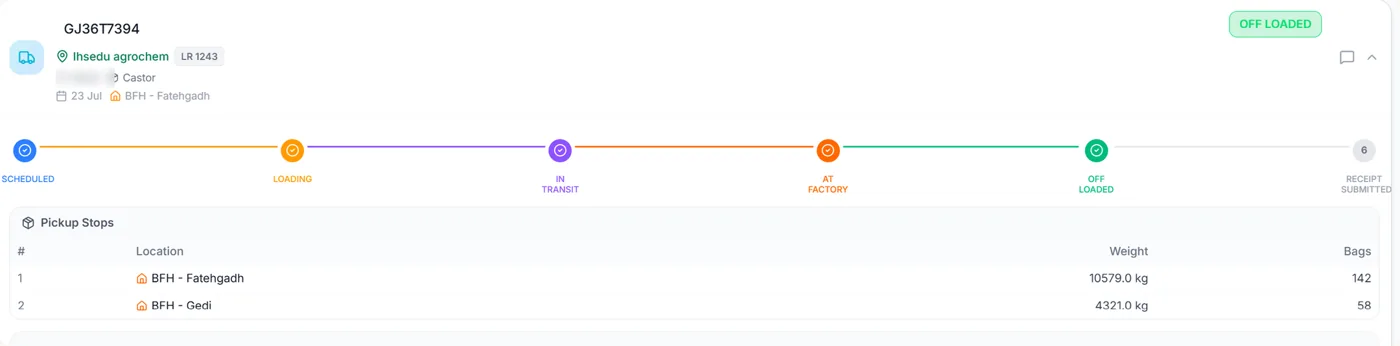
Bull Logistic turns each trip into one record that moves through six states, with the person responsible for each state stamping it.
Before
- Trucks arranged on WhatsApp calls.
- No record of driver, vehicle or documents per trip.
- No weight reconciliation at the factory, so shortages were disputes.
- Urgent dispatches went out on someone's say-so.
Now
- A pickup run is one master request with as many stops as it needs, at centres or at a farmer's own godown.
- Driver licence, RC book and the LR number are on the trip.
- Weighbridge photos at loading and at the factory; the shortage, if any, is a number on the record.
- Weight edits and urgent runs go through an approval that is replayed only when a manager says yes.
- Push notifications at every state to everyone on the trip.
How it works
Scheduled
A centre manager raises a pickup run with its stops and expected weights.
Loading
Weights at each stop, bag counts, the weighbridge slip, the driver's papers.
In transit
The load is a fact on file, not a call to the driver.
At the factoryCheck
The factory's weighbridge reading goes in with its photo.
Off-loaded
Shortage or excess is computed against what left the centre; freight and advances are settled from it.
Receipt
The trip closes only when the receipt is on record.
What it changed
- Weight disputes became a column on a screen instead of a phone fight.
- The office can see every truck on the road and what it carries.
- The audit trail answers who approved what, and when, for every rupee of freight.
On screen
Built with Next.js 16 with Server Actions, Prisma on PostgreSQL, NextAuth, Web Push, S3 for photos and documents, deployed on AWS EC2, RDS and S3.